

Fox History Entries
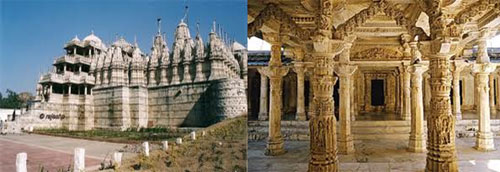
The Jain Dilwara temples of India are located about 2 ½ kilometers from Mount Abu, Rajasthan only hill station. There temples built by Chalukya between the 11th and 13th centuries AD are world famous for their stunning use of marble. The five legendary marble temples of Dilwara are a sacred pilgrimage place of the Jains. Some consider them to be one of the most beautiful Jain pilgrimage sites in the world. The marble temples have an opulent entranceway, the simplicity in architecture reflecting Jain values like honesty and frugality. The temples are in the midst of a range of forested hills. The high wall shrouds the temple complex. The ornamental detail spreading over the minutely carved ceilings, doorways, pillars and panels is simply marvelous. For the people who come to perform rituals here, there are facilities to bathe and get ready. Guided tour hours for tourists are pasted outside the temple. You might see monkeys looking for food outside the temple area.
Dilwara Temple
By- Kunal Modi
Viii, Shri Ajit Senior Secondary School
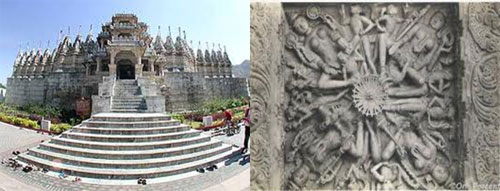
This temple carved entirely out of white marble was built in 1021 by Vimal Shah, a minister of Bhimdev 1, the Chalukya king of Gujarat. The temple is dedicated to the first Jain Tirthankar (teacher or guide). This temple stands in an open courtyard surrounded by a corridor, which has numerous cells containing smaller idols of the Tirthankars. The richly carved corridors, pillars, arches and ‘mandaps’ of the temple are amazing. The ceilings feature engraved designs of lotus- buds, petals, flowers and scenes from Jain and Hindu mythology. The Rang Manda is a grand hall supported by 12 decorated pillars and nicely carved out arches with a breathtaking central dome. On the pillars are carved female figurines playing musical instruments and 16 Vidhyadevis or the goddesses of knowledge each one holding her own symbol. The Navchowki is a collection of nine rectangular ceiling each one containing beautiful carvings of different designs supported on ornate pillars. The Gudh Mandap is a simple hall once you step inside its heavily decorated doorway. Installed here is the idol of Adi Nath or lord Rishadev as he is also known. The Mandap is meant for ‘Arti’ to the idol. The Hastishala (Elephant Cell) was contributed by Prithvipal, a descendant of Vimal Shah in 1147- 49 and features a row of elephants in sculpture.
Vimal Vasahi Temple
By- Kunal Modi
Viii, Shri Ajit Senior Secondary School


