
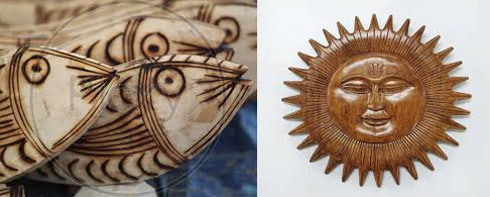
Wood carving in Chhattisgarh dates back to the 10th century AD, when it was first used by native tribes as building materials. Over time, a skilled community of artisans known as the Badhiya emerged specialising in crafting beautiful objects from wood. Using mainly manual techniques and minimal machinery, these artisans create everything from intricate ceilings and doors to life-sized sculptures of deities. Bastar Wooden Craft represents local mythology, rituals, religion, and folklore in its magnificent shapes and forms. The unusual raw character of the finish enhances the product's rustic appeal.Their craft utilises various types of wood, including Shisham, Teak, Dhudi, and Sal.
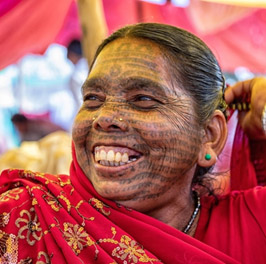
In Chhattisgarh, a unique tattooing practice called Godna thrives. Primarily done by women on women from tribal and lower caste communities, Godna transcends mere decoration. These intricate designs, created by puncturing the skin with needles, serve as social markers, beautiful adornments, and even a symbolic passage into adulthood, with motifs like "sita rasoi" marking a woman's entry into domestic life. Some cultures employ thorns or sharpened bamboo sticks to pierce the skin, as well as ink or a combination of cow bile, soot, herbs, and pig fat. Ink can also be formed by crushing and burning a variety of grape seeds, or by combining vegetable juice with oil and soot. This tradition is not just art, but a powerful symbol of identity and culture passed down through generations.
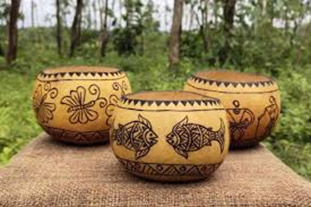
Tumba craft, the art of transforming wild bottle gourds into beautiful objects, exemplifies the unconventional spirit of creativity. These gourds, known as “opo squash” or “lauki”, are not only functional water containers but also a canvas for artistic expression. Bastar's skilled artisans meticulously carve and etch dried Tumbas, transforming them into lamps, jewellery, toys, and more. The etched designs often depict local myths, folklore, and symbols. Unfortunately, this unique and expressive art form is at risk of disappearing.
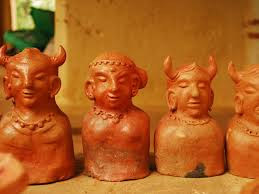
Terracotta figure making has been passed down through generations in Chhattisgarh, particularly in the regions of Bastar, Raigarh, and Ambikar. These experienced potters turn lumps of clay collected from riverbanks into beautiful, symbolic figurines. Using their hands and rudimentary pottery wheels, they bring their imaginations to life by sculpting clay into items that depict local customs, tribal traditions, and their communities' hopes and joys. These terracotta sculptures can even reflect different stages of human existence, demonstrating Chhattisgarh's long-standing creative tradition.
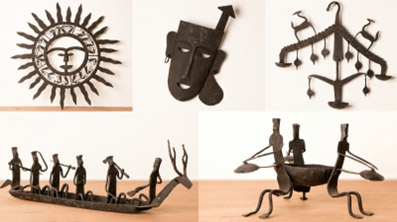
The Bastar Iron Craft, also known as “Loha Shilp”, has a long and distinct history in Chhattisgarh's Bastar area. This elegantly simple art form developed with the region's iron working culture. Initially, these talented artisans created necessary tools for farming and hunting to help the surrounding tribes. The skill gradually evolved into a well-respected art style, gaining global acclaim.
Wrought ironwork is especially well-known at Kondagaon, Umargaon, and Gunagaon. Beautiful lamps (deepaks) of various forms, frequently with numerous levels and embellished with bird or animal images, are among the traditional works. Other common things include elaborate leaf-shaped structures and hanging or standing lamps (diyas).
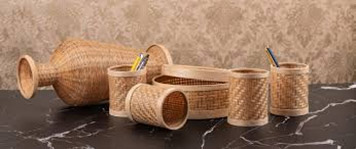
Deeply rooted in Bastar's tribal culture for centuries, bamboo is more than just a material. It's considered sacred, and craftspeople use it to create objects used in ceremonies and rituals, from wind chimes whispering in the trees to intricate masks adorning dancers. Beyond its practical uses, Bastar's bamboo art holds symbolic meaning. The varied shapes and patterns are seen as a representation of the region's diverse communities united as one. Furthermore, bamboo itself embodies the strength, resilience, and courage of the Bastar tribes, who have persevered through hardships while striving to preserve their traditional way of life.
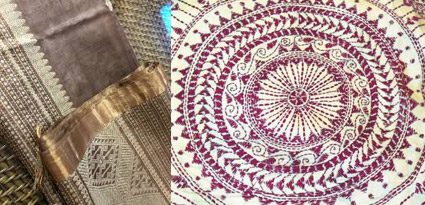
Korba and Champa districts in Chhattisgarh are well-known for their high-quality Kosa silk. This lavish cloth is handcrafted with natural dyes to produce magnificent and intricate motifs. Kosa silk sarees are not only lovely, but they are also highly durable.
The silk is made from the cocoons of a particular silkworm called Antheraea mylitta, which lives on Arjun, Saja, and Sal trees. The scarcity of these silkworms, combined with the hard and time-consuming procedure of making the sarees, contributes to their high price.
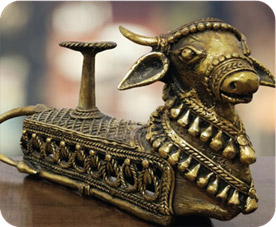
Dhokra craft, a remarkable art form with roots dating back to the Harappan and Mohenjo Daro civilisations, sets itself apart from similar practices worldwide. Each Dhokra piece is a unique masterpiece, meticulously handcrafted through a 27-step process that forgoes the use of moulds. The lost wax technique is at the heart of this artistry. Beeswax, chosen for its versatility, is moulded into intricate designs by skilled artisans. This delicate wax form is then cast in metal, and the wax is melted away, revealing a stunning metal replica. This intricate process is deeply connected to the religious beliefs and practices of the communities that have kept this tradition alive for centuries.
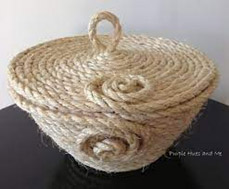
Sisal thrives in Chhattisgarh's marshes, boasting strong, waterproof fibres. These natural qualities make them ideal for crafting long-lasting practical items like ropes, baskets, and mats. Traditionally used for livestock ropes, sisal crafts have blossomed in recent times. Skilled artisans, particularly women, now weave these smooth, spear-shaped plant fibres into beautiful and functional items like potholders, bags, wall hangings, hammocks, and even dolls. This tradition flourishes not just in Bastar, but extends to Narayanpur and Kondagaon districts as well.
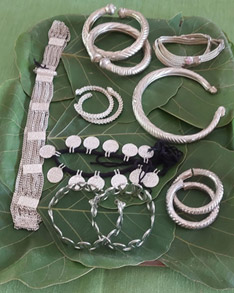
Chhattisgarh's tribal women adorn themselves with a dazzling array of jewellery. From silver necklaces (suta) and nose rings (phuli) to various earrings (bali and khunti), their ornaments grace every part of the body – forearms (ainthi), wrists (patta, choora), waist (kardhani), upper arms (pounchhi), and even toes (bichhiya) which is only worn by married women. Crafted in precious metals like gold and silver, or more affordable options like bronze and mixed metals, the jewellery caters to diverse preferences. Beyond metals, vibrant beadwork, cowrie shells, and feathers also find their place in these stunning adornments. Raipur is a hub for these stunning works, reflecting Chhattisgarh's traditional tribal artistry.